popuparchitect.com Gleam Technologies

Tuesday, 9 September 2014

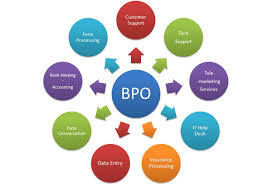
Gleam Technologies : Goals of BPO Services

Gleam Technologies goals of BPO services
  • One of the objective is cost savings.
  • Free up capacity and make better use of limited internal resources and capture business knowledge.
  •  The goal is to tend the garden more intelligently, to leverage standardization and address unique growth challenges.
best bpo in tamilnadu,  gleam technologies,  gleam technologies neyveli, gleam technologies project

best bpo in tamilnadu,  gleam technologies,  gleam technologies neyveli, gleam technologies project

  • Gleam Technologies focus on granularity and performance.
  • To ensure that BPO initiatives take advantage of every opportunity to leverage efficiency gains
  • To provides  quality and speed and more proactively identify potential risk
  • To provides e-commerce effectiveness.
  • To maintain two way communication
  • To provides business to individual
  • To maintain high ethical standards

Gleam Technologies : Benefits of BPO

Gleam Technologies  provides the main advantage of BPO is the way in which it helps increase a company's flexibility.Business process outsourcing enhances the flexibility of an organization in different ways: Most services provided by BPO vendors are offered on a fee-for-service basis, using business models such as Remote In-Sourcing or similar and outsourcing models.This can help a company to become more flexible by transforming fixed into  variable cost.


  • Gleam Technologies Outsourcing may provide a firm with increased flexibility in its resource management and may reduce response times to major environmental changes.

  • Gleam Technologies  BPO contributes to a company’s flexibility is that a company is able to focus on its core competencies, without being burdened by the demands of bureaucratic restraints.

  •  A third way in which gleam technologies  BPO increases organizational flexibility is by increasing the speed of business processes flexibility is seen as a stage in the organizational life cycle.

  • BPO therefore allows firms to retain their entrepreneurial speed and agility, which they would otherwise sacrifice in order to become efficient as they expanded.

Gleam Technologies: The main principles of user interface design

Gleam technologies The main principles of user interface design
  • Gleam Technologies The structure principle: Design should organize the user interface purposefully, in meaningful and useful ways based on clear, consistent models that are apparent and recognizable to users, putting related things together and separating unrelated things, differentiating dissimilar things and making similar things resemble one another. The structure principle is concerned with overall user interface architecture.


  • Gleam Technologies The simplicity principle: The design should make simple, common tasks easy, communicating clearly and simply in the user’s own language, and providing good shortcuts that are meaningfully related to longer procedures.
  • Gleam Technologies The visibility principle: The design should make all needed options and materials for a given task visible without distracting the user with extraneous or redundant information. Good designs don’t overwhelm users with alternatives or confuse with unneeded information.
  • The feedback principle: The design should keep users informed of actions or interpretations, changes of state or condition, and errors or exceptions that are relevant and of interest to the user through clear, concise, and unambiguous language familiar to users.
  • The tolerance principle: The design should be flexible and tolerant, reducing the cost of mistakes and misuse by allowing undoing and redoing, while also preventing errors wherever possible by tolerating varied inputs and sequences and by interpreting all reasonable actions.
  • Gleam Technologies The reuse principle: The design should reuse internal and external components and behaviors, maintaining consistency with purpose rather than merely arbitrary consistency, thus reducing the need for users to rethink and remember.